College Admissions
Hardest Math Classes in High School
AP Calculus BC covers the most material, but AP Statistics and Calculus AB have the lowest pass rates. Here's what each class asks and which to take.
Read Now
6
minute read


Begin your journey to exceptional projects
Carnegie Mellon, MIT and Penn offer AI majors; Stanford and Georgia Tech offer AI tracks. Compare 10 colleges' AI degrees, coursework and deadlines.



Our picks for the best undergraduate AI programs are Carnegie Mellon, MIT, Penn, Purdue, Rice, UC San Diego, USC and Drexel, which offer AI majors. Stanford and Georgia Tech make the list for their official AI tracks inside computer science.
How we chose: each pick has a named AI major or an official AI track, not just a minor or certificate. We confirmed each program's degree name, requirements and deadlines on the university's own pages, and the order within each group is not a ranking.
Eight of the ten have early deadlines between October 15 and November 2, and Georgia Tech's October 15 date for Georgia residents has passed. Before you finish your list, read our guide to early action, early decision and restrictive early action.
Facts checked October 2026. Degree details come from each university's catalog or program page. Deadlines are for students applying in the 2026-27 cycle to start in fall 2027.
Carnegie Mellon says it introduced the first US bachelor's degree in AI in fall 2018. MIT, Penn, Purdue, Rice, UC San Diego, USC and Drexel now offer AI majors too. A May 2026 study counted more than 350 undergraduate AI programs at US four-year universities, including minors, concentrations and certificates.
Coursework covers computer science, math, statistics, machine learning and ethics. It's taught by six units, including the Robotics Institute and the Machine Learning Department.
You must be admitted to SCS, then you declare the AI major in the spring of your first year. CMU lets you apply to only one of its colleges. Students in other CMU colleges can add the AI minor or the AI additional major instead.
Students could first declare 6-4 in fall 2022. It draws on computer science, electrical engineering, statistics, operations research, and brain and cognitive sciences. The degree chart requires one subject in each of five areas: data, models, decisions, computation and human-centric AI.
You don't apply to a major: most MIT students declare in the spring of their first year. Through UROP, undergraduates join faculty research for pay, for credit or as volunteers.
The degree began in fall 2024, and Penn calls it the first undergraduate major of its kind in the Ivy League. Applications for first-year students opened with the fall 2025 class.
It takes 37 course units, with at least one course in each of six AI areas, an AI ethics course and a cognitive science elective. It ends with a two-semester senior design project.
Purdue's major covers machine learning, reasoning and decision-making, and it connects AI with cognitive psychology and neuroscience. The admissions page says ethics and societal impact run through the curriculum.
Purdue admits students to individual majors, so choose AI on your application. Transfer applicants need at least a 3.5 GPA, plus a B or better in two computer science courses and two semesters of calculus.
Rice started the major in fall 2025. It takes 67 to 69 credit hours of a 120-hour degree, including two semesters of calculus, linear algebra and statistics.
Every student takes Ethics of Artificial Intelligence and a psychology course, then a two-semester AI senior design project. Electives come from three of five areas, such as robotics and autonomy or perception and language.
UC San Diego's first 200-plus AI majors started in fall 2025. They take new introductory AI courses, a required ethics course written for the major and a senior capstone project.
For 2026-27, only students admitted directly into the AI major can take it, and current students can't switch in. If you want it, list it as your major on the UC application.
USC's first class started in fall 2026. Students choose one of three tracks: computing foundations and applications; computer engineering, signal processing and controls; or AI systems and operations engineering.
The computing track's curriculum sheet lists Calculus I to III, linear algebra, probability, an AI ethics course and a capstone.
Drexel opened the major to entering classes in 2026. You can complete up to three co-ops, which are work placements built into the degree. It ends with a year-long senior project sponsored by a company.
The major is open only to first-year students, not to internal or external transfers, so choose it when you apply.
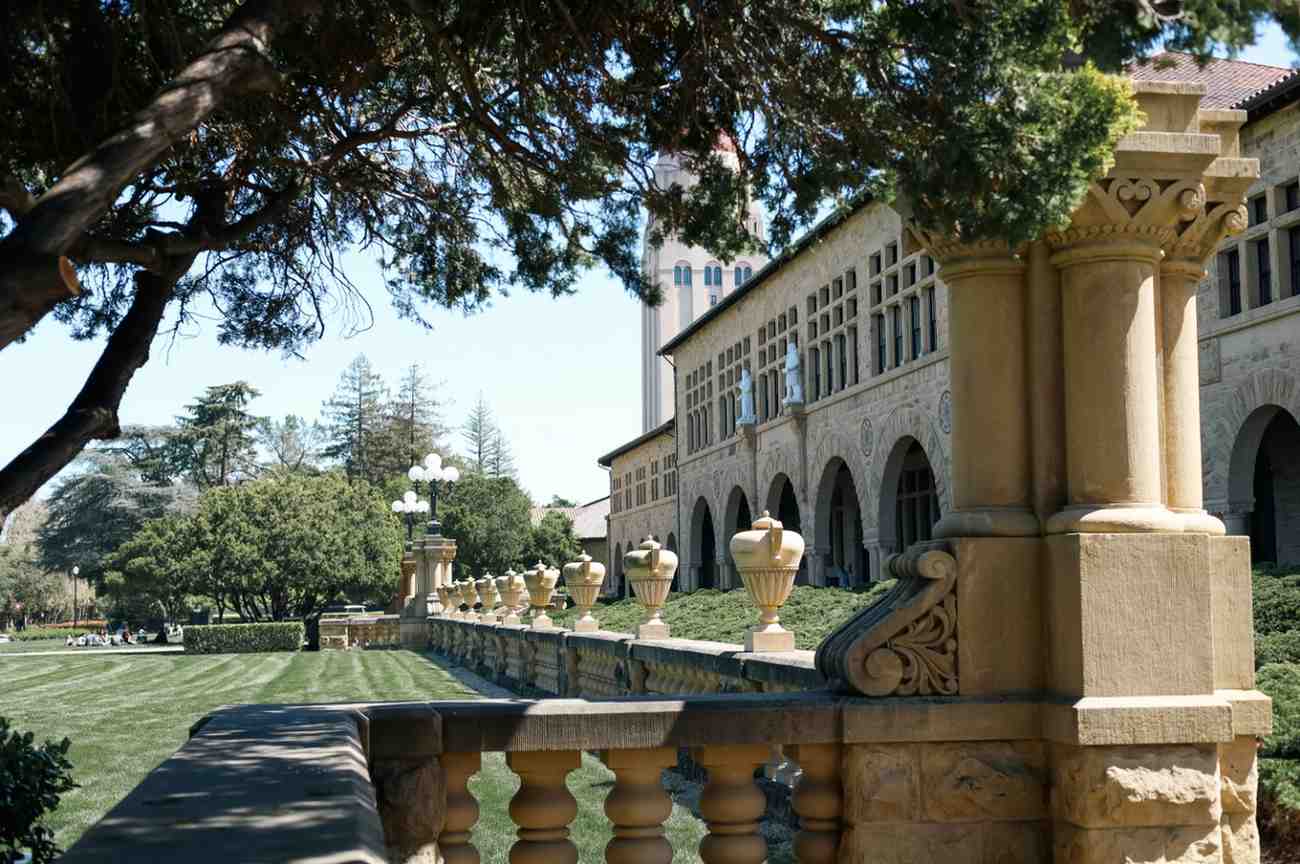
Stanford and Georgia Tech teach AI through their computer science majors, so you graduate with a CS degree and an AI focus. Stanford CS majors pick one of nine set tracks, including Artificial Intelligence, or design their own. Georgia Tech CS majors complete two of nine "threads," and one is Artificial Intelligence.
Every Stanford CS track needs at least 25 units and seven classes. Sample AI track courses include CS221 (AI principles), CS224N (natural language processing with deep learning) and CS229 (machine learning).
You declare a major by the end of sophomore spring, so you can try CS before you commit. In the summer, CURIS pays undergraduates to do research in a CS faculty member's group.
The CS degree takes 124 credit hours, and every student completes two threads. Pairing Artificial Intelligence with a second thread, such as Theory or People, sets the direction of your AI work.
The Early Action deadline for Georgia residents was October 15 and has passed; those decisions come in early December. Out-of-state early applicants apply by November 2 and hear in late January.
Choose computer science if you're not sure yet, since many CS majors can still focus on AI through a track or minor. Choose an AI major if you're sure, and check how each school lets you into it. AI majors add requirements a CS major may skip, such as ethics and cognitive science.
Where the requirements differ:
If you're still choosing between fields, our guide to picking an intended college major walks through the decision.
For research and PhD study, faculty output matters more than undergraduate majors. CSRankings ranks computer science departments by papers at the top conferences in each area, counting only faculty who can advise PhD students. It uses publication data instead of reputation surveys.
AI research jobs often require graduate school. The Bureau of Labor Statistics lists a master's degree as the typical entry-level education for computer and information research scientists. As a high school student, use CSRankings to see where AI research happens, then check whether undergraduates can join it.
Take the most advanced math your school offers, learn to program and finish one AI project you can explain. Rice, Penn and USC all require calculus, linear algebra and probability or statistics.
To build and launch an app or AI product with a mentor, see our Nova Product Launch program.
Don't assume you can switch into an AI major after you enroll. UC San Diego takes only direct admits for 2026-27, and Drexel's major is closed to transfers. Check each school's entry rules before you apply.
On this list, Carnegie Mellon, MIT, Stanford, Penn, Rice, USC and Drexel are private. Of those, CMU (2018), MIT (2022) and Penn (2024) have the longest-running AI majors. Rice, USC and Drexel launched theirs in 2025 or 2026.
Drexel's AI and machine learning major lets you complete up to three co-ops and ends with a company-sponsored senior project. At research-heavy schools, the closer match is a lab job, such as MIT's UROP or Stanford's CURIS summer internships.
Yes, many colleges offer AI minors or concentrations. CMU has an AI minor open to any major, and Columbia lists an Artificial Intelligence minor in its 2026-27 bulletin. You can also major in computer science and take machine learning electives.
Common paths include software engineering, machine learning engineering and data science, plus research roles after graduate school. The Bureau of Labor Statistics reports a median wage of $140,300 for computer and information research scientists in May 2025. It projects 22% job growth from 2025 to 2035.